Expert Discussion | Rethinking Rehabilitation
How Virtual Reality Makes Cognitive Therapies Suitable for Everyday Use
Julian Specht , Christian Gavenea
Thursday, 28 May 2026
17:00 - 18:00 CEST
About the event
The biggest bottleneck in neurological rehabilitation is often not the training itself - but rather the transfer to everyday life.
After a stroke, traumatic brain injury, or in cases of neurological conditions such as dementia, many patients must relearn cognitive skills. Although progress is made during therapeutic training, the transfer to real-life situations is often limited.
A key reason for this:
Traditional therapeutic approaches often rely on isolated exercises - such as those on paper or a computer - that have limited applicability to daily life.
This is exactly where our portfolio company Living Brain comes in, which has already been successfully funded twice through Companisto.
In the expert talk, the team demonstrates how VR-based therapeutic approaches translate cognitive rehabilitation into realistic environments: Patients specifically train for everyday situations to apply learned skills directly in daily life. Clinical studies show significant progress, while simultaneously creating a valuable data pool that provides new insights into daily living skills and is also relevant for future pharmaceutical applications.
What to Expect
- Why transferring skills to everyday life is one of the biggest challenges in neurological rehabilitation
- Where traditional therapeutic approaches reach their limits
- How virtual reality enables realistic training environments
- Why clinically proven efficacy is crucial for scaling digital therapies
- The role of so-called “real-world data” for pharmaceutical companies
- How digital therapies are increasingly being used as complementary solutions to medications
Register now
Learn how virtual reality is rethinking neurological rehabilitation - and join the live discussion on clinical applications, data potential, and the future of digital therapies.
Speaker:
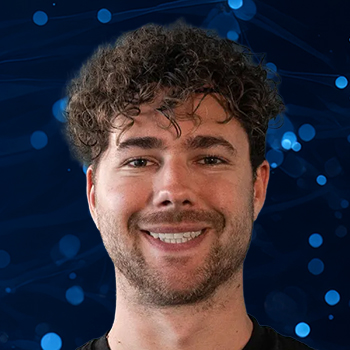
Julian Specht ist CEO & Gründer von Living Brain und beschäftigt sich mit der Entwicklung neuer Ansätze für neurologische Rehabilitation und kognitive Therapie. Sein Fokus liegt auf der Verbindung wissenschaftlicher Erkenntnisse mit digitalen Technologien, um alltagsnahe und datenbasierte Therapieformen zu ermöglichen.
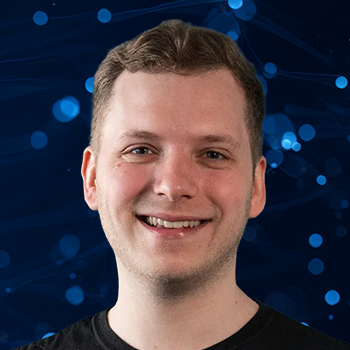
Christian Gavenea ist Software Developer bei Living Brain und arbeitet an der technischen Entwicklung der Plattform. Sein Schwerpunkt liegt auf der Umsetzung von Virtual-Reality-Anwendungen und digitalen Lösungen für neurologische Rehabilitation und kognitive Trainingsprozesse.
-
Location

-
Location
Online


